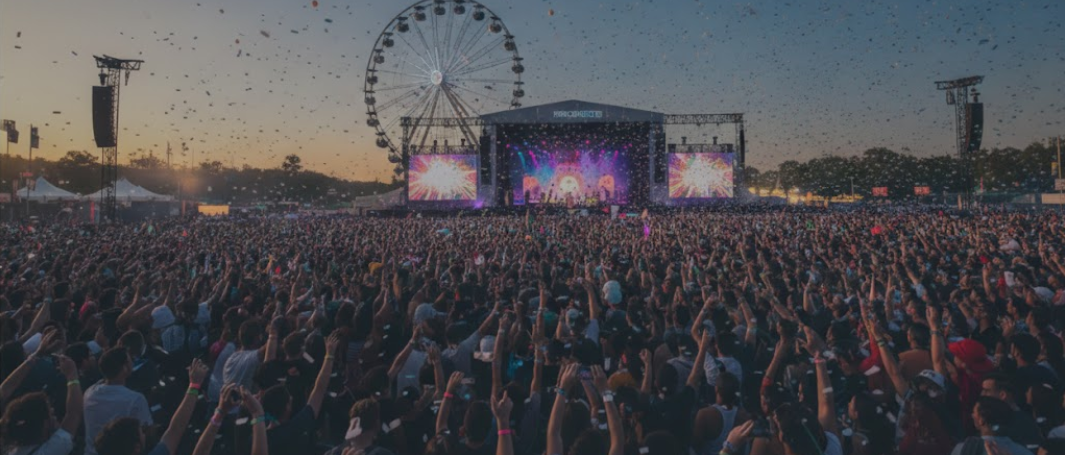
When you're responsible for bringing a large group of people together, "hope for the best" is not a safety strategy.
Whether you're operating a concert venue, organizing a festival, managing a sporting event, coordinating a conference, or hosting any gathering with a significant number of attendees, a strong safety plan starts before the first person walks through the gate.
A pre-event safety audit gives your team an opportunity to identify potential problems, confirm that emergency procedures are understood, and make sure the people responsible for responding to an incident can actually communicate when it matters.
At Stratagem 98, our focus is emergency-oriented communication through MyEventAlly, a mobile solution designed to support communication during critical situations. Use the checklist below as a starting point for your next event.
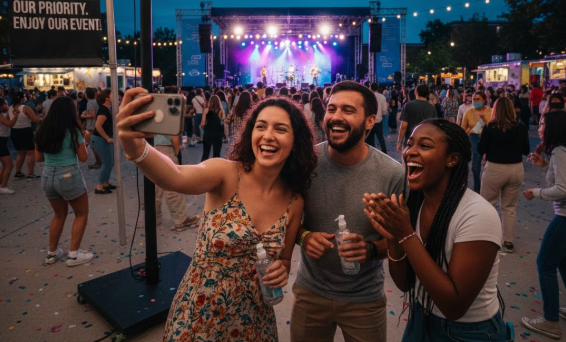 Every name on this checklist exists so the people in this photo can enjoy the event without thinking about it.
Know Your Crowd
Start with the people, not the floor plan. Attendance patterns drive almost every other decision on this list.
- ✓ Confirm expected attendance.
- ✓ Identify peak attendance periods.
- ✓ Determine high-density concentration points.
- ✓ Separate VIP, staff, vendor, performer, and GA areas.
- ✓ Plan for attendees requiring additional assistance.
- ✓ Review crowd-flow and bottleneck points.
- ✓ Establish overflow protocols for unexpected crowds.
Inspect the Venue
Walk every space attendees will use, then walk the ones they won't. Both create risk.
- ✓ Verify primary and secondary entry/exit points.
- ✓ Confirm emergency exits are clear and accessible.
- ✓ Check emergency lighting and path signage.
- ✓ Inspect stairways, ramps, and walkways.
- ✓ Identify trip, electrical, fire, and structural hazards.
- ✓ Confirm restricted zones are secured.
- ✓ Map dead zones with unreliable cellular/radio signal.
- ✓ Review primary and secondary evacuation routes.
Don't limit the inspection to public spaces. Staff-only areas, loading zones, parking lots, backstage spaces, and vendor corridors carry equal risk.
Confirm Emergency Resources
Know what you have before you need it. A resource nobody can locate isn't a resource.
- ✓ Verify first-aid kits are stocked and accessible.
- ✓ Confirm AED locations and functional status.
- ✓ Identify the nearest medical facility and route times.
- ✓ Confirm emergency-service (EMS) access paths.
- ✓ Verify fire extinguishers and required safety gear.
- ✓ Confirm security personnel assignments.
- ✓ Establish where emergency teams are stationed.
- ✓ Ensure staff know how to request assistance.
Test Your Communication Plan
Communication is one of the most important—and most frequently overlooked—parts of event safety. A safety plan is only as effective as your ability to execute it under pressure.
- ✓ Identify emergency response authority lines.
- ✓ Establish security communication channels.
- ✓ Establish venue management contacts.
- ✓ Designate who contacts emergency services.
- ✓ Establish a clear chain of command.
- ✓ Test radios and digital devices before doors open.
- ✓ Confirm backup communication methods.
- ✓ Train staff on sharing precise locations.
Prepare for Common Event Emergencies
Don't build your plan around a single type of emergency. Review response procedures for:
1. Who responds?
2. How do they communicate?
3. How do they know where to go?
Brief Every Team Member
A plan is only as good as the team executing it. Ensure every staff member receives clear instruction before gates open.
- ✓ Conduct comprehensive pre-event staff briefing.
- ✓ Review emergency roles and specific responsibilities.
- ✓ Confirm key event leaders and decision-makers by name.
- ✓ Review evacuation routes and designated safe zones.
- ✓ Ensure staff know how to trigger emergency incident alerts.
Walk Through "What If?" Scenarios
Run quick tabletop walkthroughs with key operational leads to test your workflow logic.
5-Minute Pre-Event Exercise:
"What happens if someone collapses near the main stage right now?"
Map out every single step in real-time: who takes the initial report, how the signal is sent, who responds on foot, and who guides EMS personnel directly to the location.
Final Go/No-Go Safety Check
Run a final systematic pass immediately prior to opening the doors or gates.
- ✓ Confirm all primary and emergency exits remain clear and unlocked.
- ✓ Confirm medical stations and response kits are fully manned and prepped.
- ✓ Verify security personnel are deployed at designated station posts.
- ✓ Perform a final live comms check across all dispatch devices.
- ✓ Document and sign off on audit findings with lead event director.
Safety Doesn't Start When Something Goes Wrong
The best time to discover a communication failure is during a pre-event test—not during an emergency. Audit your venue, prepare your team, and ensure you have a practical way to communicate when seconds matter.
Get in touch with Stratagem 98 →MyEventAlly is developed by Stratagem 98 LLC, an Indianapolis-based event app company focused on making events safer through mobile technology. The app is offered at no cost to attendees at participating events. See MyEventAlly use cases →