Event safety has always been a priority. But 2026 is the year the industry is finally catching up with the technology to match that priority.
The days of relying entirely on radio checklists, static emergency plans, and hoping staff are in the right place at the right time are giving way to something more connected, more responsive, and more intelligent. Across public safety, venue management, and live event coordination, the same signal is coming through loud and clear: real-time data and connected systems are the backbone of modern emergency response.
For event organizers, that shift isn't optional anymore. Attendee expectations have changed. Liability exposure has grown. And the technology to build a genuinely modern safety operation is finally accessible - not just to stadium-scale productions, but to fairs, festivals, corporate conferences, and community events of every size.
Here's where event safety technology is heading in 2026, and what it means for the way you run your events.
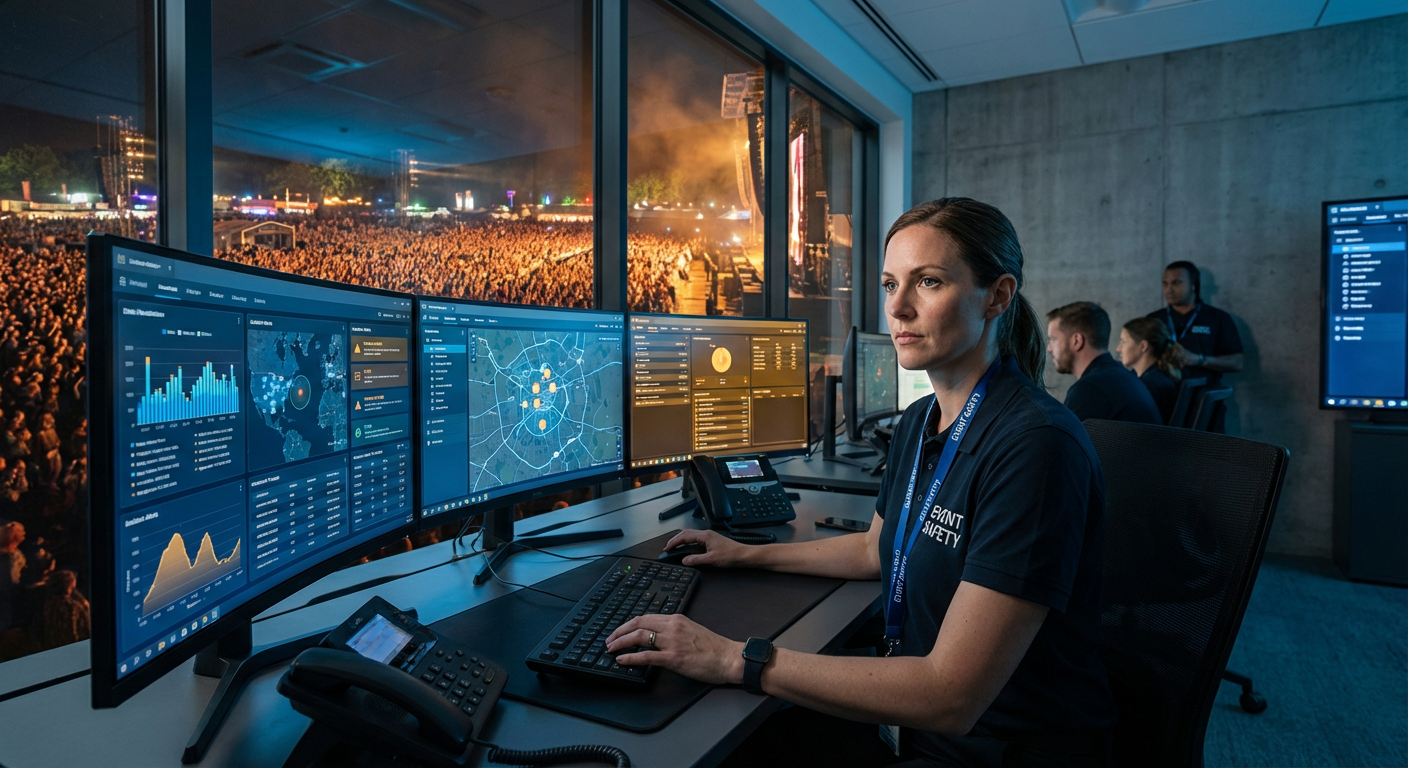 The 2026 event safety stack is connected, real-time, and attendee-inclusive, a fundamental shift from how most events still operate.
1. Real-Time Communication Is Replacing the Radio
The walkie-talkie had a good run. But in 2026, shared radio channels are increasingly being recognized for what they are: a single-threaded communication system trying to manage multi-threaded emergencies.
The trend is toward dedicated digital communication channels that can carry rich information - not just a voice - simultaneously to every relevant team member. Text, photos, voice recordings, and location data, all delivered the moment an incident is reported, to everyone who needs to know at once.
This is exactly the standard MyEventAlly was built to meet. When a guest or staff member sends an alert through the app, it reaches your entire safety team simultaneously - complete with location, in-app text, photos, and a 20-second voice recording. No relay chain. No channel competition. No information lost between the moment something happens and the moment help is moving.
In 2026, the communication baseline for well-run events is shifting from "can we reach each other" to "can we share complete, actionable information instantly." MyEventAlly is that upgrade.
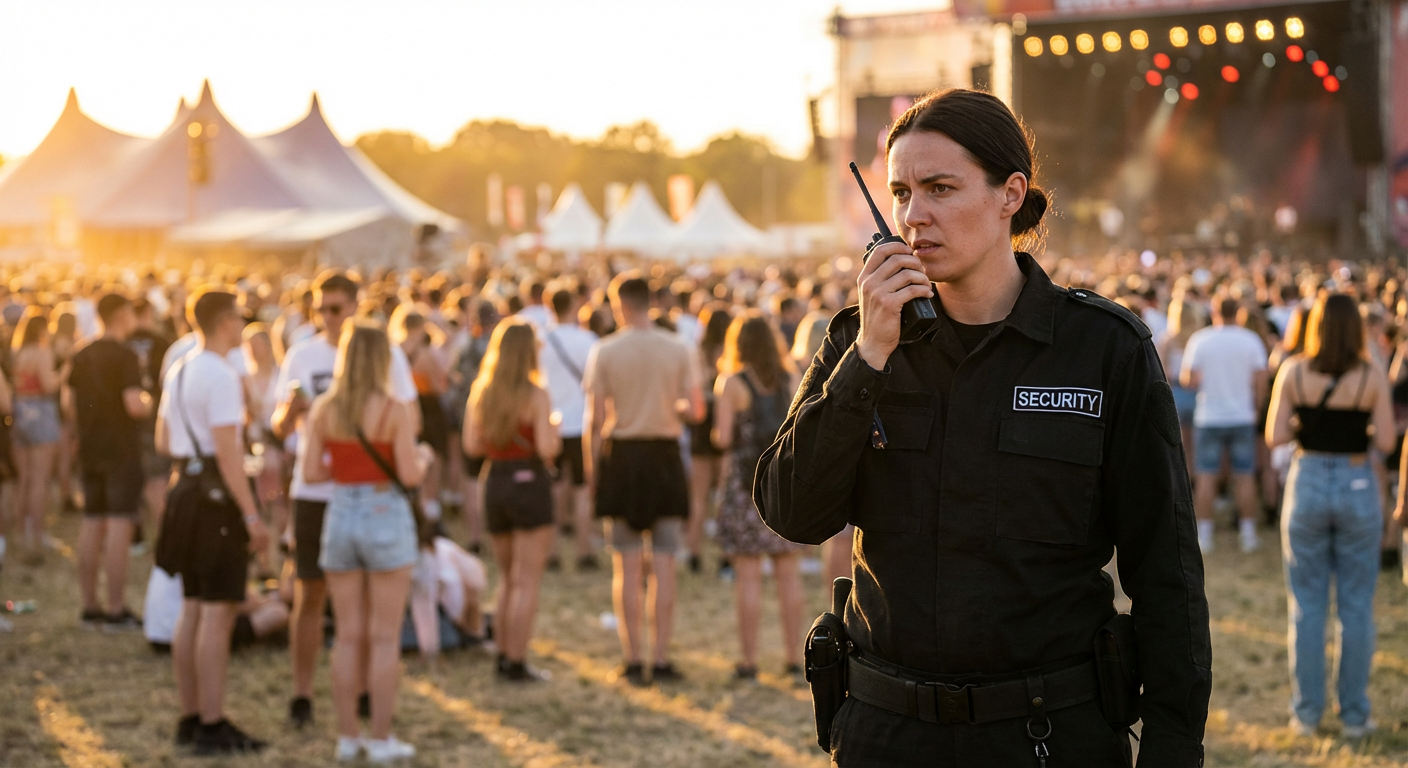 Radios defined event safety for decades. In 2026, the standard has moved beyond what a shared channel can deliver.
2. Location Awareness Is Becoming Non-Negotiable
Finding someone fast has always mattered. In 2026, the expectation is that your safety system should make it automatic.
Public safety trend reports this year consistently highlight real-time location data as a critical gap in traditional event safety infrastructure. The problem isn't that organizers don't care where incidents happen - it's that their systems don't tell them precisely enough, fast enough, to make a difference.
The shift is toward location-aware alerting: systems where the moment a report is made, responders already know exactly where to go. No descriptions. No estimates. No searching.
For outdoor events - festivals, fairs, open-air venues - GPS delivers this reliably. MyEventAlly's location sharing means that every alert carries a position your team can act on immediately. Combined with party mode, which lets attendees share their location with their group, the app creates a layer of spatial awareness across your entire event footprint that traditional safety systems simply can't replicate.
3. Rapid Escalation Paths Are Replacing Linear Response Chains
One of the clearest findings in 2026 safety research is how often response chains break down - not because people aren't trying, but because the escalation path is too slow and too linear.
Traditional event safety operates like a phone tree: one person gets the report, decides who to call, makes that call, and waits. Under pressure, at volume, in noise, this chain misfires constantly.
The trend is toward simultaneous escalation - systems where a single alert triggers the right response from multiple teams at once, without waiting for a human to decide who to notify next.
MyEventAlly is built on this principle. Security and medical receive the same alert at the same moment. Both teams see the same location, the same context, the same media. They coordinate from the first second - not after a handoff that should have happened two minutes earlier. For situations that require both a security presence and medical attention, that simultaneity is the difference between a contained incident and an escalated one.
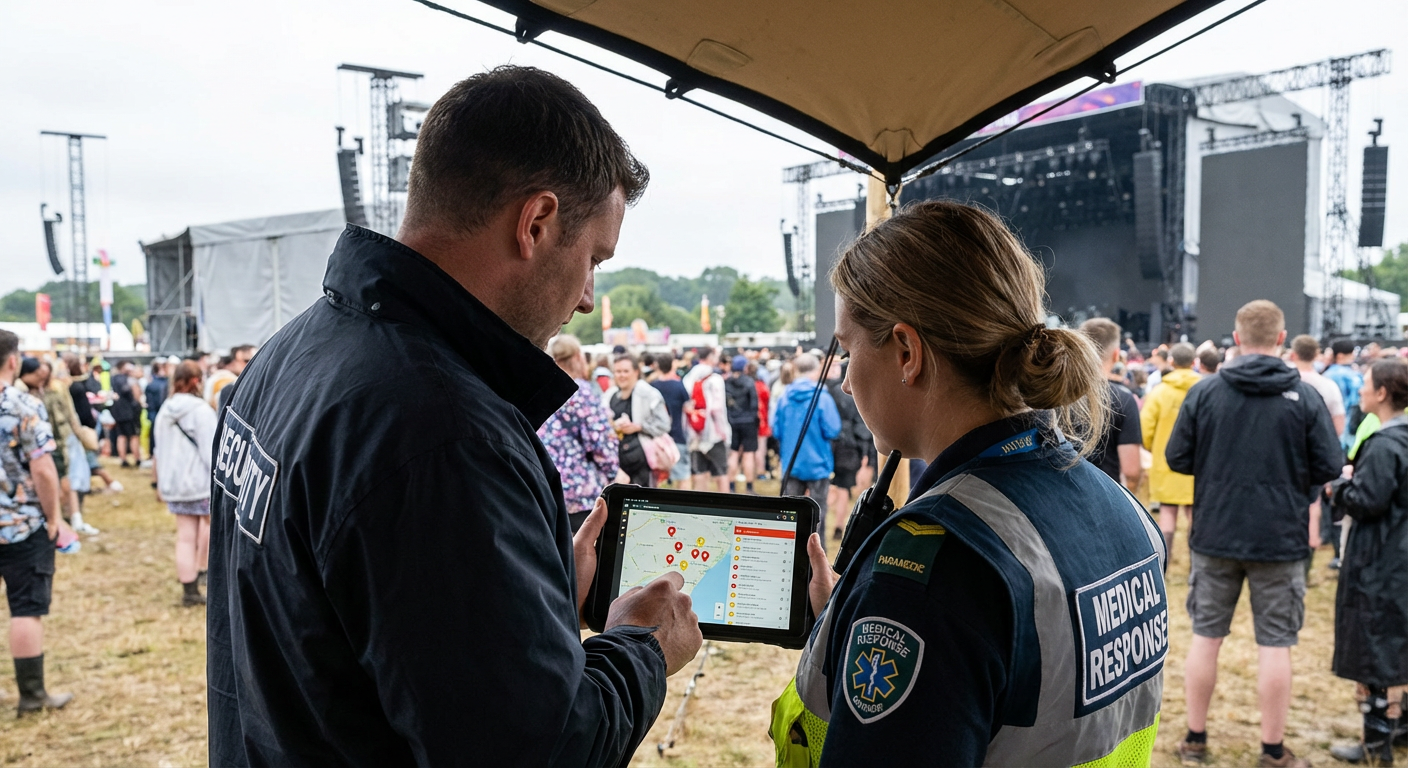 Simultaneous escalation means both teams are moving in the right direction before the first handoff would have even happened.
4. Interoperability Between Staff and Attendees Is Emerging as a Priority
For years, event safety technology has been staff-facing. Dashboards, radios, command centers - all of it pointed inward, toward the people running the event. Attendees remained outside the system entirely, limited to flagging down a staffer or calling 911.
2026 is seeing a meaningful shift toward attendee-integrated safety systems - platforms that bring guests into the communication loop as active participants rather than passive bystanders.
The logic is straightforward: attendees are distributed across your entire venue. They see things before your staff does. They are often the first to recognize that something is wrong. A safety system that can receive a report directly from a guest - with location, context, and media - is fundamentally more responsive than one that depends on a staff member being in the right place at the right time.
MyEventAlly closes this gap entirely. Any attendee with the app can send a rich, location-tagged alert directly to your safety team in seconds. No middleman. No delay. Every guest becomes a node in your safety network, expanding your team's awareness across the full event footprint without adding a single staff member.
5. Post-Incident Documentation Is Becoming a Standard, Not an Afterthought
The final trend shaping event safety in 2026 is one that plays out after the last guest leaves: data-driven post-incident review.
Historically, post-event safety reviews have relied on staff memory, paper logs, and whatever made it into the radio recording. That leaves significant gaps - in timing, in location, in sequence of events - that make it difficult to identify what went wrong and how to prevent it next time.
The 2026 standard is a complete, timestamped digital record of every incident: when the alert was sent, where it originated, how quickly the team responded, what information was available, and how the situation resolved. That record doesn't just satisfy liability documentation requirements - it becomes the foundation of a smarter safety plan for every future event.
MyEventAlly logs every alert automatically. After each event, your team has access to a full incident record - response times, locations, alert volume by time window, communication threads. That data tells you exactly where your safety operation performed well and where it needs to change, replacing post-event guesswork with evidence-based planning.
Post-incident data isn't just documentation, it's the input that makes every future event measurably safer.
What 2026 Is Really Asking of Event Organizers
Taken together, these five trends point to the same conclusion: the event safety stack of 2026 is connected, real-time, and attendee-inclusive. It moves information from the point of need to the point of response without friction, keeps every relevant team member in the loop simultaneously, and creates a record that makes every future event safer.
MyEventAlly was built to be the mobile-first communication layer that meets this standard. It handles real-time alerting, location awareness, simultaneous escalation, attendee integration, and post-incident documentation - in a single app that's free for every attendee at every participating event.
The technology is here. The question for 2026 is which event organizers will build their safety operation around it before they need it.
We're looking for venue managers, festival organizers, and event coordinators who want to be among the first to put MyEventAlly to work before it officially goes live. If that's you, we want you involved from the start.
MyEventAlly is developed by Stratagem 98 LLC, an Indianapolis-based event app company. The platform is available at no cost to attendees at participating events. See MyEventAlly use cases →